Executive brief
Technology Doesn’t Transform Organizations. People Do.
The conditions around technology determine whether an investment becomes a new capability or another disconnected initiative.

Technology is only the visible part of transformation.
Organizations often concentrate their energy on selecting, implementing, and integrating technology. Those decisions matter, but they do not determine whether value is realized. Technology creates possibility. Transformation depends on the operating environment around it: the decisions leaders make, the information they trust, the governance they maintain, and the discipline with which work moves from intent to execution.
The foundations are connected.
Governance, operating models, business architecture, delivery excellence, organizational capability, and connected information are often treated as separate workstreams. In practice, they are the conditions that make one another effective. Governance gives decisions a clear home. Business architecture connects investment to capabilities and outcomes. Delivery discipline turns priorities into progress. Connected information gives leaders a shared view of what matters.
AI adoption makes this interdependence more visible. A new capability cannot create meaningful value when decision rights are unclear, data is disconnected, operating practices are inconsistent, or teams are not ready to work differently. AI may accelerate the need for change, but it does not remove the need for leadership and disciplined execution.
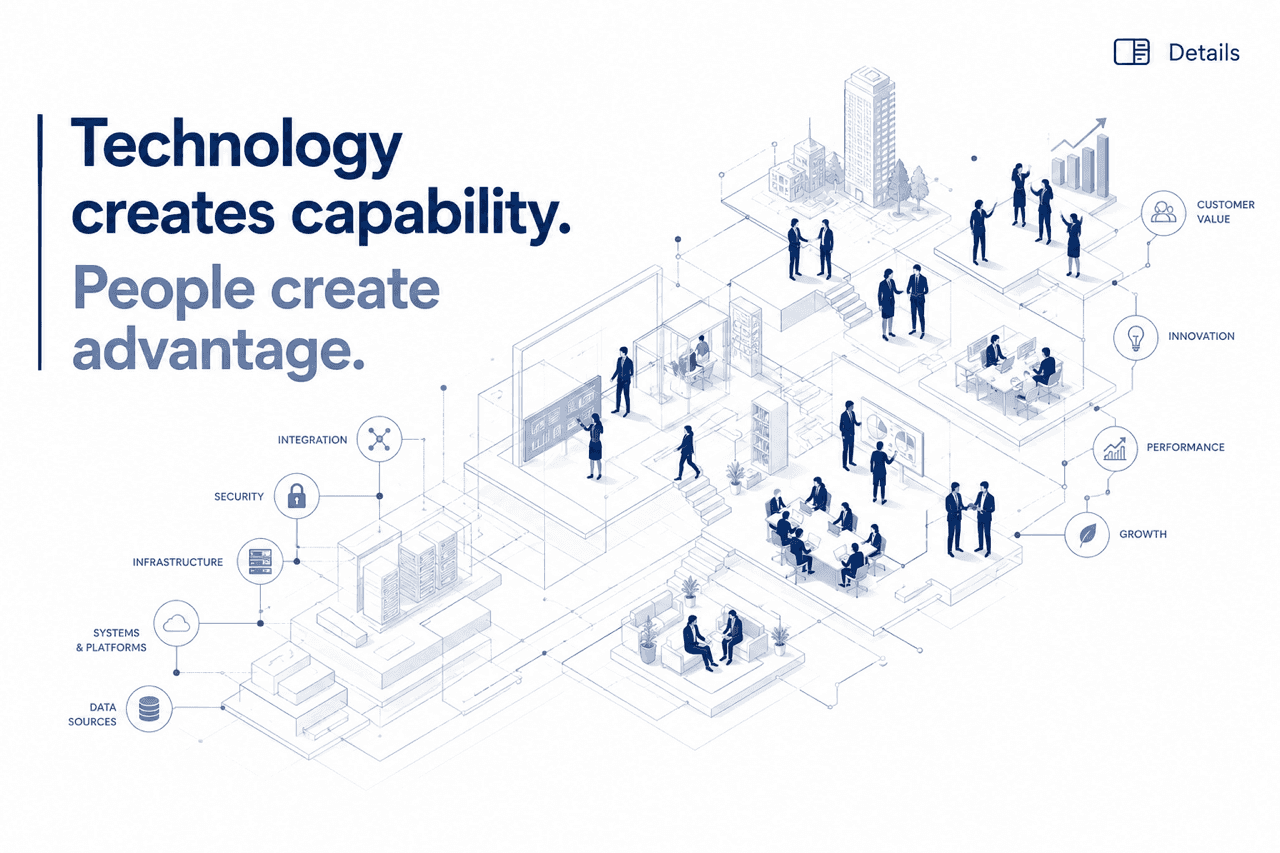
People determine whether change becomes capability.
The measure of transformation is not whether a platform has launched. It is whether people can make better decisions, execute with more confidence, and produce better outcomes because the organization now works differently. Technology enables transformation. People, leadership, and disciplined execution determine whether it succeeds.